
JALA KRISHI SAMRUDDHI YOJANE
- HOME
- JALA KRISHI SAMRUDDHI YOJANE
For farming families, water is more than a natural resource—it determines what can be grown, how long a crop can survive, and how secure a household's livelihood can be. In Kalaghatagi Taluk, where farming is closely dependent on rainfall and the availability of water, strengthening water security is therefore central to building resilient rural communities.
Recognising this need, MANUVIKASA initiated the Jala Krishi Samruddhi Yojane under its Integrated Farming System (IFS) Project in September 2025. The project is being implemented across 32 villages of Kalaghatagi Taluk, with an approach that goes beyond individual agricultural interventions. It brings together water management, soil conservation, sustainable agriculture, livestock care, nutrition, women's collectives and access to government programmes to address the interconnected challenges faced by farming families.
The first step was to understand these challenges from the farmers themselves.
Starting with the realities of farming families
Rather than beginning with a predetermined set of interventions, the project began with a comprehensive farmer survey. A Google Form-based survey covered around 12,000 farmers across 32 villages, gathering information on farming practices, landholdings, water availability, major agricultural constraints, livelihood sources and the support required by individual families.
The scale of the survey provided the project team with a broad picture of the agricultural situation across the block. It also made it possible to identify that the challenges faced by farmers are interconnected: limited and uncertain water availability affects crop choices and productivity; soil and water runoff reduces the productive potential of agricultural land; and the dependence of many families on livestock and seasonal employment makes household livelihoods vulnerable to agricultural uncertainty.
The findings became the foundation for planning interventions according to the specific needs of farmers and villages rather than following a one-size-fits-all approach.
But understanding the situation was only the beginning. For solutions to remain relevant and sustainable, farmers and communities needed to become part of the decision-making process.
Building solutions through village participation
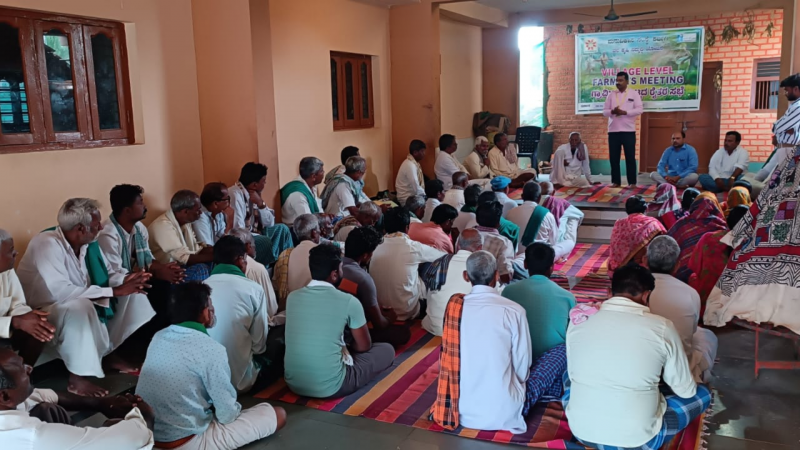
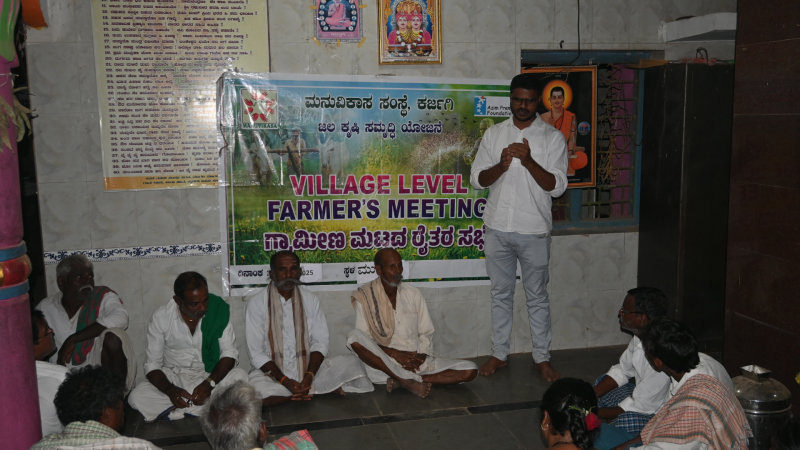
Community participation has consequently remained at the heart of the project. Village-level meetings are being conducted across all 32 villages, with at least two meetings every month in each village. These meetings provide a regular platform for farmers and community members to discuss agriculture, water-related concerns, government programmes and other local priorities.
To strengthen this process, village-level committees have been formed in all 32 villages. These committees provide a local mechanism for identifying needs, facilitating discussions and strengthening community ownership of development activities.
This continuous engagement has helped connect the information gathered through the initial survey with interventions on the ground. One of the clearest areas emerging from this process has been the need to conserve rainwater, reduce water loss and improve the productivity of existing agricultural resources.
From rainfall to farm productivity: investing in water and soil
For farmers, receiving rainfall is only one part of the water-security equation. The ability to capture, store and retain that water determines how much of it can ultimately be used by crops.
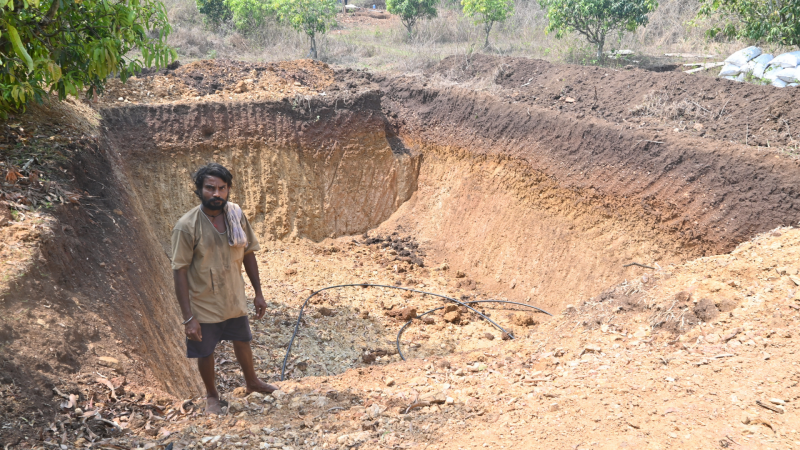
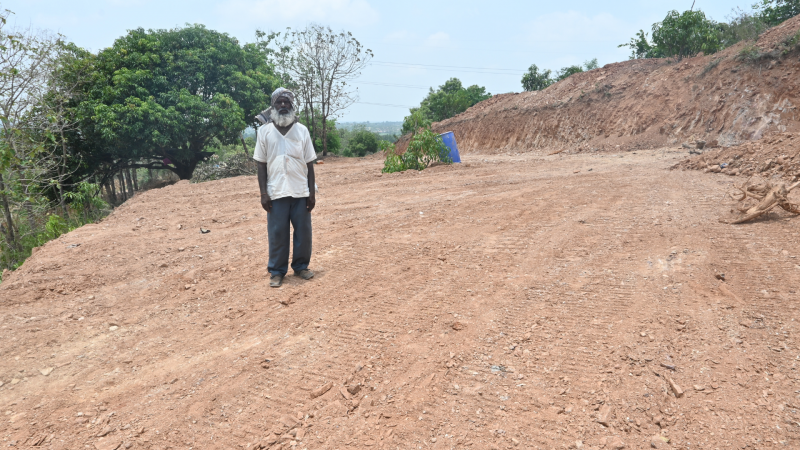
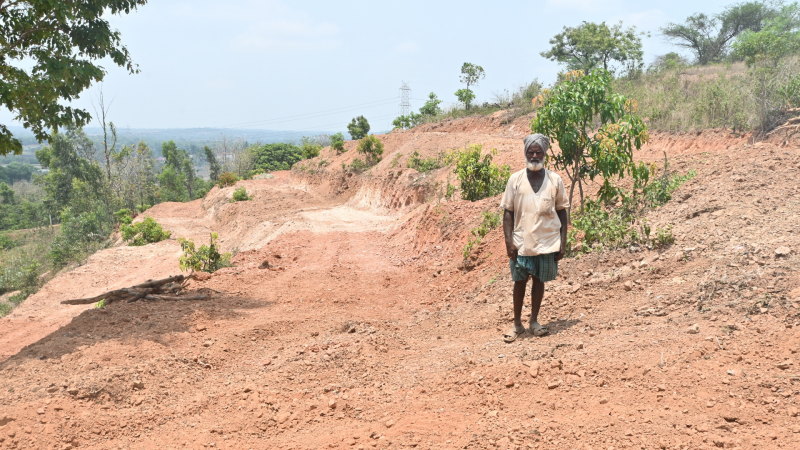
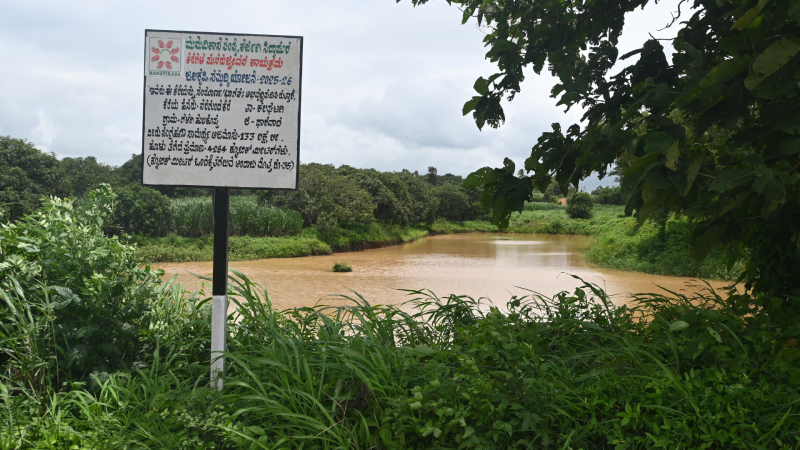
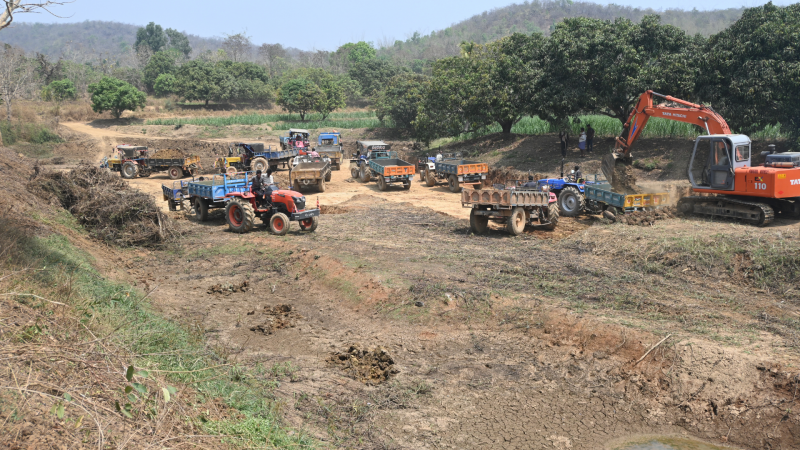
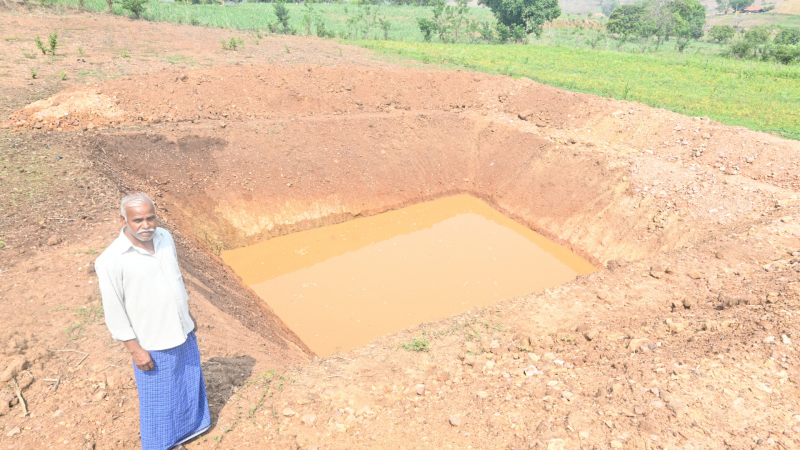
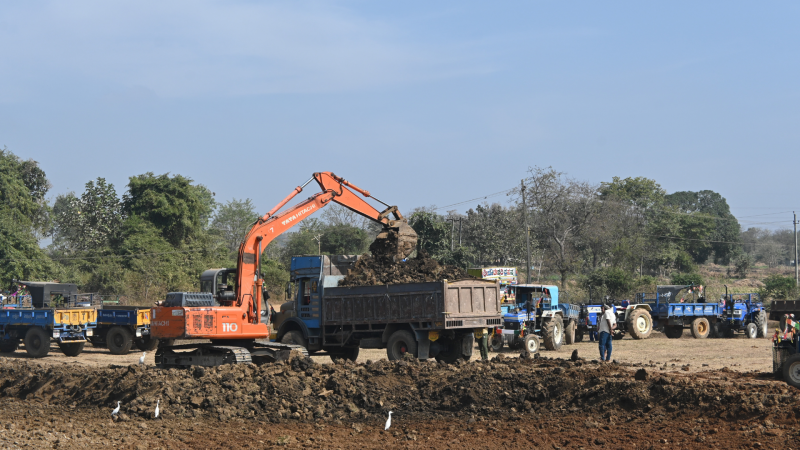
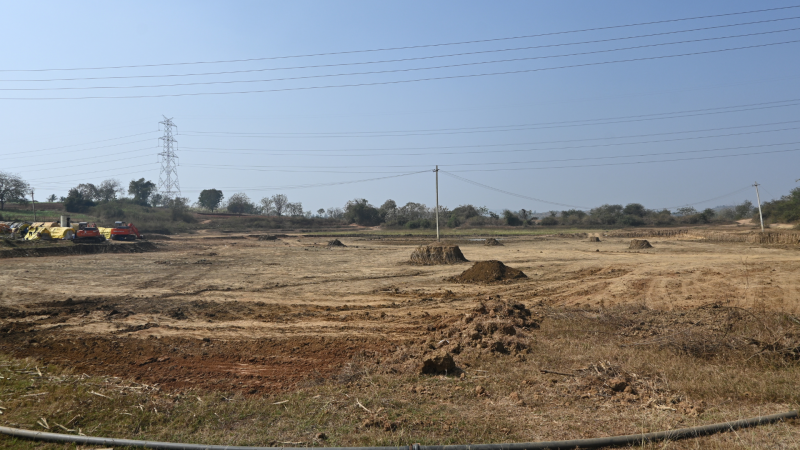
During the first year of the IFS Project, MANUVIKASA constructed 21 farm ponds to harvest and store rainwater for agricultural use. These structures are intended to provide farmers with a source of water that can be used during dry spells, helping protect crops when rainfall is interrupted.
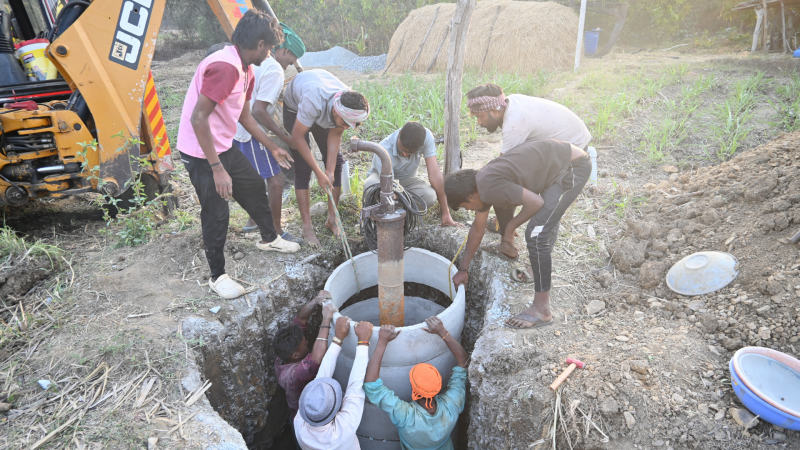
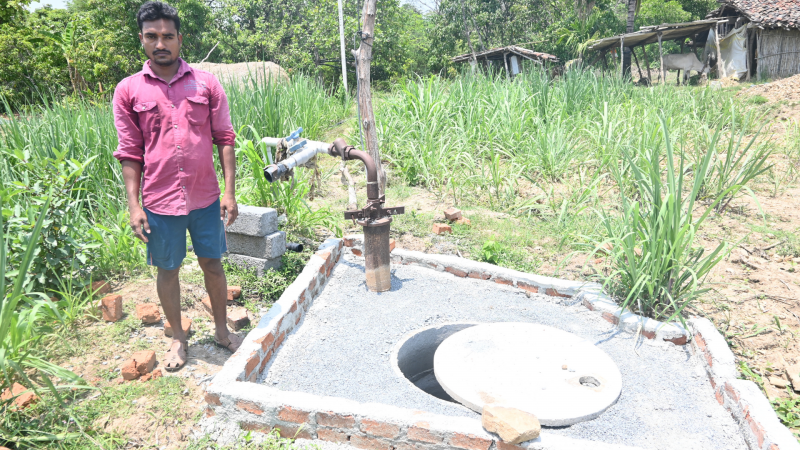
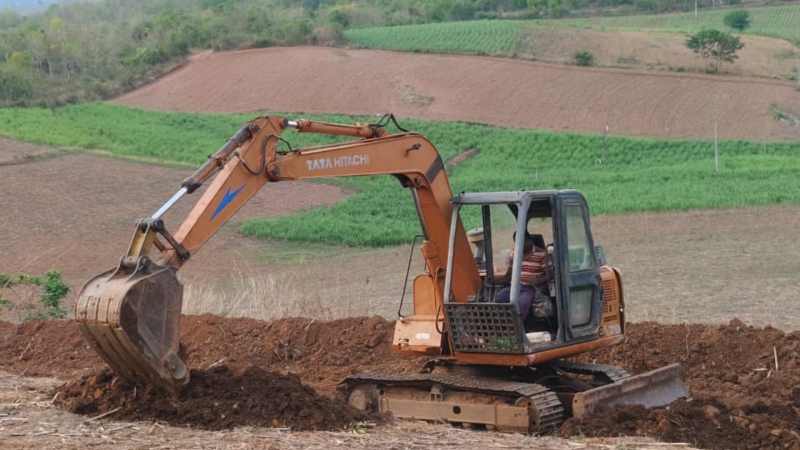
Water conservation has also been combined with soil conservation. 124 land-levelling and trench-cum-bunding works were completed to reduce runoff and soil erosion, improve moisture retention and make agricultural land more productive. In addition, 15 borewell recharge works were undertaken to support groundwater recharge and improve the sustainability of existing irrigation sources.
Together, these 160 water- and soil-management interventions—21 farm ponds, 124 land-levelling and trench-cum-bunding works, and 15 borewell recharge works—represent an effort to move from simply responding to water scarcity towards managing water more efficiently at the farm level.
However, water availability alone does not determine farm resilience. The next question is how effectively farmers can use the available resources to improve their production systems.
Turning water security into sustainable agriculture
With better water and soil management, farmers have greater opportunities to diversify their production and reduce dependence on a single crop. Sustainable agriculture has therefore formed another important pillar of the project.
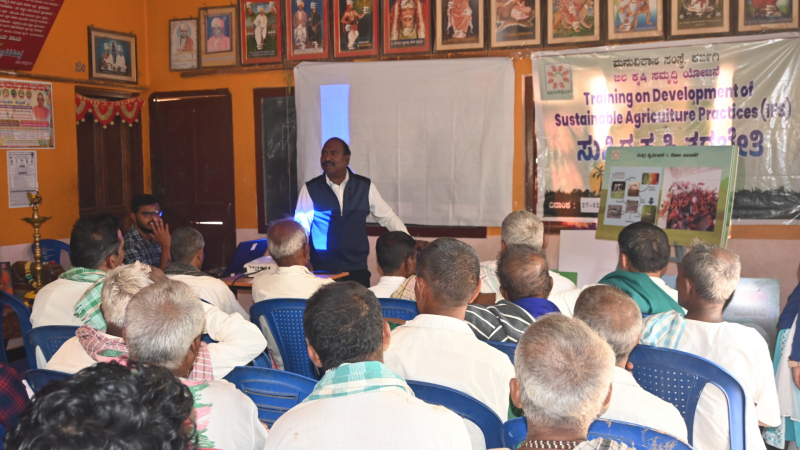
During the first year, 121 farmers received training in sustainable agriculture, covering improved cultivation practices, soil health, crop diversification, appropriate use of farm inputs and reduction of unnecessary chemical inputs.
Training was followed by practical demonstration. From these farmers, 25 were selected for model farm development. Each model farm received support based on its requirements, including four bags of manure, vegetable seeds and different varieties of fruit and other plants such as arecanut and coconut. Where required, farmers were also supported with drip or sprinkler irrigation systems.
These model farms are intended to demonstrate how diversified and sustainable farming systems can be developed under local conditions. More importantly, they provide neighbouring farmers with practical examples that can be observed and adapted according to their own land, water availability and farming needs.
The emphasis on diversification also extends beyond field crops. For many families, improving household nutrition and reducing food expenditure can be as important as increasing farm income.
Growing nutrition at the household level
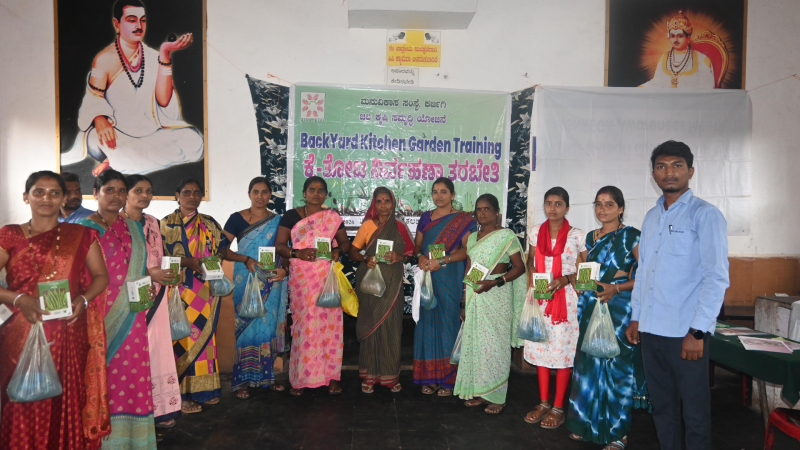
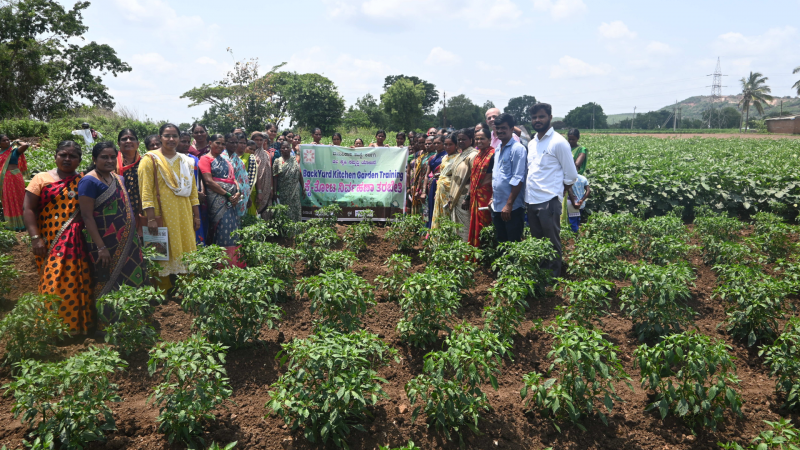
Kitchen gardens were introduced to encourage farming families, particularly women, to make productive use of available household space while improving access to fresh vegetables.
114 members received kitchen garden training, along with vegetable seeds and manure. The activity enables families to grow vegetables for their own consumption, contributing to household nutrition while reducing expenditure on vegetables purchased from the market.
Where production exceeds household requirements, surplus vegetables can also be sold locally, creating a small but meaningful opportunity for additional household income.
The focus on women's participation is significant because strengthening rural livelihoods is not limited to improving agricultural production alone. It also requires creating opportunities for women to participate in household-level production, savings, collective action and livelihood decisions.
Supporting the livestock that supports farming families
For many rural households, livestock forms an essential part of the farming economy. Cows, buffaloes, sheep, bulls and other animals provide income, agricultural support and livelihood security. Poor animal health can therefore directly affect household earnings.
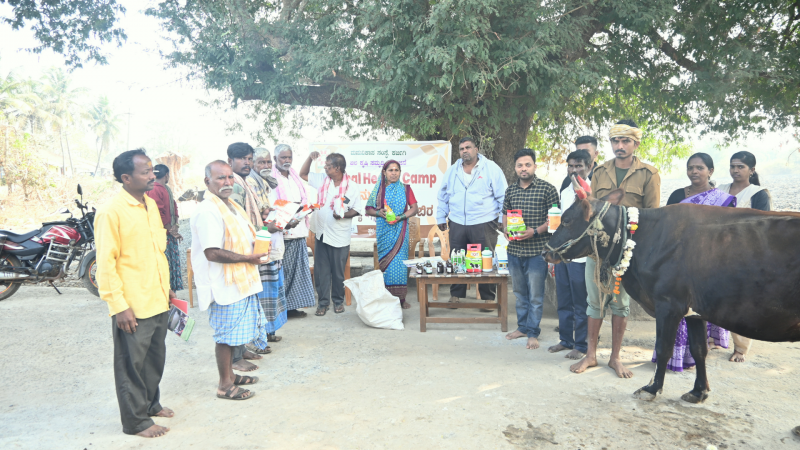
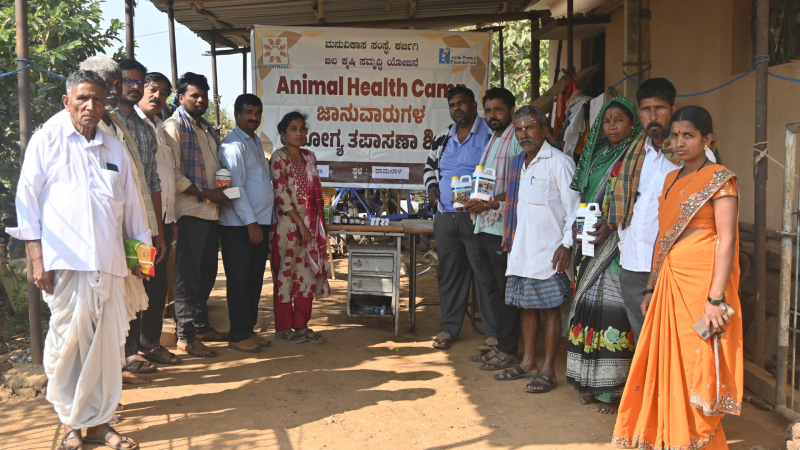
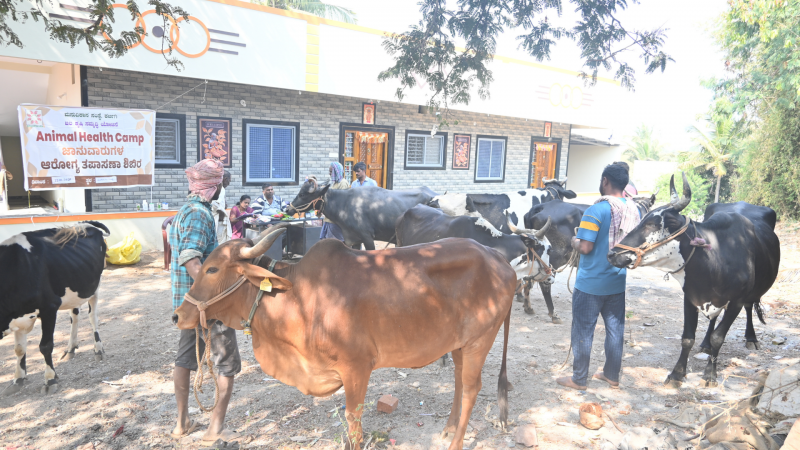
Recognising this link, MANUVIKASA organised 30 Animal Health Camps during the year, reaching more than 950 farmers and over 4,000 animals.
The camps provided free health check-ups, treatment and medicines while also creating awareness about animal health and care. By bringing veterinary support closer to farming communities, the initiative aimed to encourage timely treatment and preventive care, helping families protect an important component of their livelihoods.
The project also recognises that livelihood security depends partly on opportunities beyond the farm.
Connecting families with employment and government support
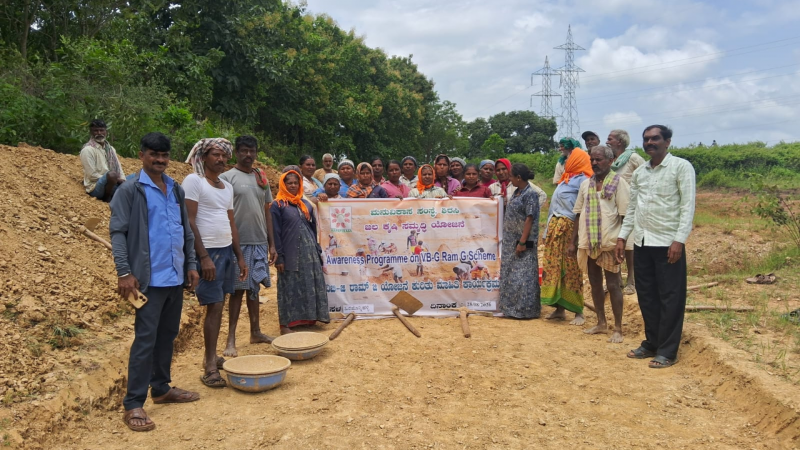
For households that experience seasonal gaps in agricultural employment, access to government employment programmes can provide an important source of income. MANUVIKASA has therefore supported communities in understanding and accessing VBG-RAM G works, while facilitating the formation of village committees and helping eligible families prepare job cards and access available employment opportunities.
Similarly, the project team has been working to connect eligible farmers and families with relevant government schemes through different departments. The needs identified through the 12,000-farmer survey, village meetings and field visits are being used to guide farmers towards schemes and services relevant to their circumstances.
This approach is intended to ensure that project support does not operate in isolation, but complements government programmes and helps farming families access resources that are already available to them.
Strengthening women’s collective power
Alongside the IFS interventions, MANUVIKASA has also strengthened women's collective platforms across the project area. More than 75 Self-Help Groups (SHGs), comprising over 750 women members, have been formed across the 32 villages.
These groups provide women with a platform for savings, information sharing, collective action and exploration of livelihood opportunities. As these groups become stronger, they can also serve as important community-level institutions through which information and opportunities reach women and their households.
A connected approach to rural resilience
The experience of the first year demonstrates why an integrated approach is necessary in a farming-dependent region such as Kalaghatagi. A farm pond by itself cannot address every challenge faced by a farming family. Water must be linked with soil conservation; water availability with efficient irrigation; agricultural production with nutrition and diversification; livestock with veterinary care; and household livelihoods with access to employment, government schemes and women's collectives.
This is the principle underlying the Jala Krishi Samruddhi Yojane.
Across 32 villages, the project has begun by listening to approximately 12,000 farmers, building community institutions and translating identified needs into practical interventions. In its first year, the programme has constructed 21 farm ponds, completed 124 land-levelling and trench-cum-bunding works, undertaken 15 borewell recharge works, trained 121 farmers in sustainable agriculture, developed 25 model farms, supported 114 members through kitchen garden training, conducted 30 animal health camps benefiting more than 950 farmers and 4,000 animals, and supported the formation of 75+ SHGs with 750+ women members.
These numbers represent more than activities completed. They represent the beginning of a broader effort to strengthen the ability of farming families to manage water, improve their farms, diversify livelihoods and withstand agricultural uncertainties.
MANUVIKASA will continue working with farmers, women and village institutions across Kalaghatagi to strengthen sustainable farming practices, improve natural resource management and expand access to opportunities and government support. The long-term vision is to build farming communities where available water and natural resources are managed wisely, agricultural productivity is strengthened, household nutrition is improved and rural families are better equipped to build resilient and sustainable livelihoods.